
The plantar fascia is a strong, fibrous band that runs along the sole of the foot from the heel bone to the toes, supporting the arch and absorbing load as you walk. Plantar fasciitis is irritation and degeneration of this band, usually where it attaches to the heel — and it is by far the commonest cause of pain under the heel.
The hallmark is sharp heel pain with the first few steps after getting out of bed or standing up after rest, which often eases a little as you get moving and then returns after prolonged standing or walking. It is common, sometimes stubborn, and can take several months to settle — but the great majority of people recover with simple, consistent self-care and do not need injections or surgery. Knowing what to do, and doing it consistently, is what matters most.
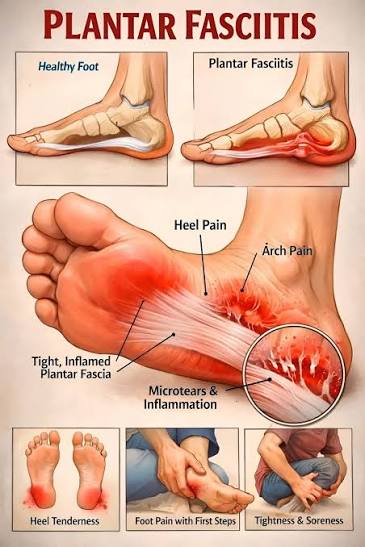
Typical features of plantar fasciitis:
Features that suggest a different cause of heel pain — and so warrant assessment — include pain that is constant, present at rest or at night, associated with numbness or tingling, following a specific injury, or accompanied by a hot, swollen or red heel.
Plantar fasciitis develops from repeated strain on the fascia. Contributing factors include:
Often several factors combine — for example, more walking in poor footwear on hard surfaces. A heel spur is sometimes seen on X-ray, but spurs are common and usually not the cause of the pain, so they rarely need treatment in their own right.
See a doctor about heel pain if:
Most plantar fasciitis does not need urgent care, but the above features mean the diagnosis should be confirmed rather than assumed.
At VinayakM, heel pain is usually diagnosed clinically:
The main purpose of assessment is to confirm plantar fasciitis and exclude the less common but important other causes of heel pain.
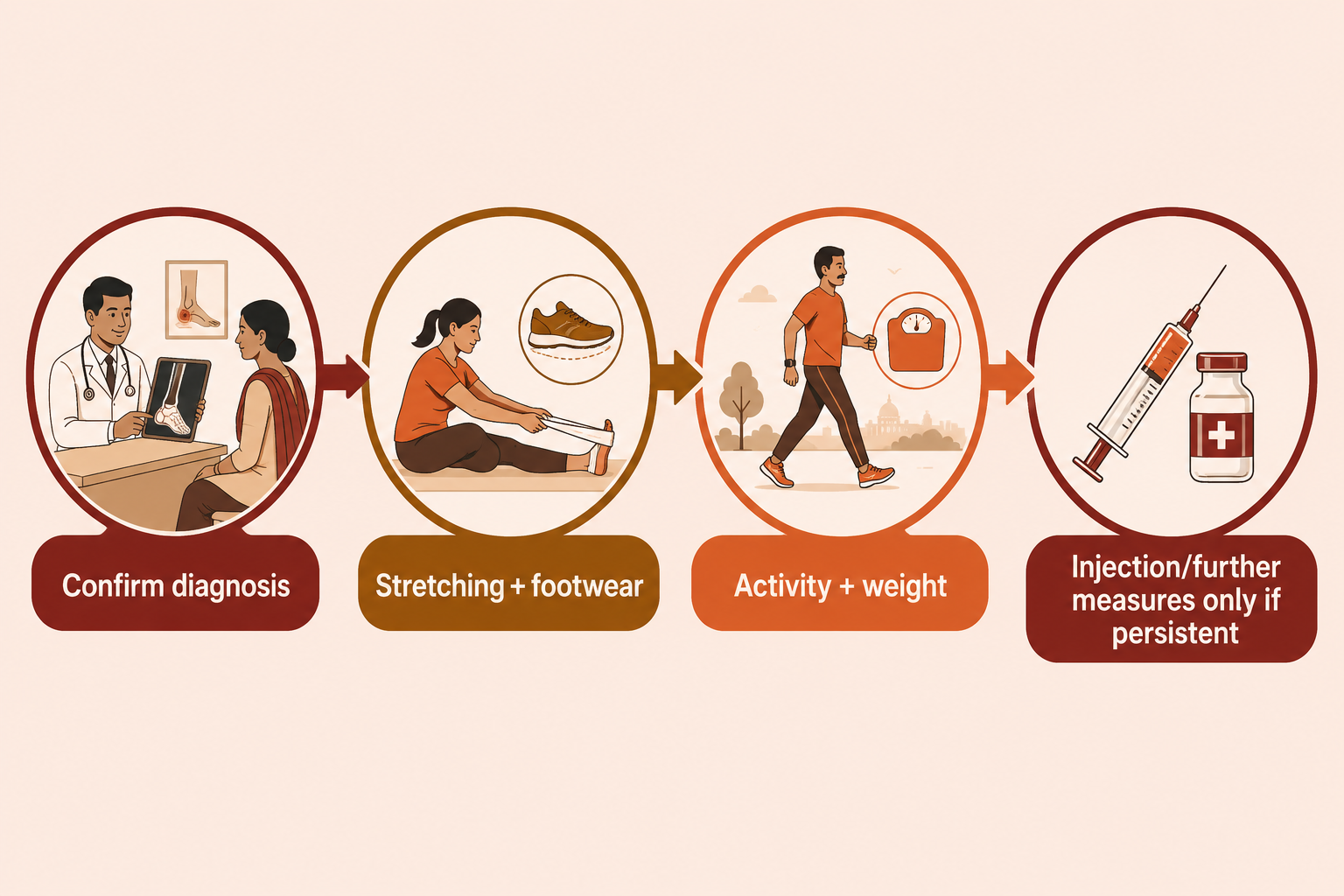
Plantar fasciitis is treated non-surgically in the great majority of cases. Consistency over weeks to months is the key.
1. Stretching (the cornerstone):
2. Footwear and support:
3. Load management:
4. Symptom relief:
5. If it persists:
6. Surgery — very rarely needed, only for a small number with severe, long-standing pain that has failed thorough non-surgical treatment.
Most people recover with the first few measures applied patiently and consistently.
At VinayakM in Greater Kailash-1, heel and foot pain is assessed by Dr Udit Vinayak (trauma, sports medicine and joint replacement surgeon), starting with an accurate diagnosis and a realistic, non-surgical plan:
We set expectations honestly: plantar fasciitis can take months, but consistent treatment resolves it for most people without surgery.
To prevent heel pain, or stop it returning:

During rest the plantar fascia tightens, and the first steps suddenly stretch and load the irritated tissue, causing the classic sharp first-step pain. It often eases after a few minutes of walking as the tissue warms and stretches, then can return after prolonged standing. This morning pattern is a hallmark of plantar fasciitis.
It can be slow — often weeks to several months — but the great majority of people recover with consistent non-surgical care. Regular calf and plantar-fascia stretching, supportive footwear, activity modification and patience are what resolve it. Because it is stubborn, sticking with the plan even once it starts improving matters.
Usually not. Heel spurs are common, are often seen in people without any pain, and are generally not the cause of plantar fasciitis. Treatment targets the fascia, not the spur. X-rays are used to check for other causes such as a fracture, not to look for a spur that would not change the plan.
Supportive, cushioned shoes with a slight heel and good arch support are best; avoid flat, thin-soled or worn-out shoes and walking barefoot on hard floors. Heel cushions or off-the-shelf arch-supporting insoles often help. Getting footwear right is one of the most effective and simplest parts of treatment.
A corticosteroid injection can help persistent plantar fasciitis, but it is used cautiously and is not a first step. Repeated injections carry risks, including thinning of the heel fat pad and, rarely, rupture of the plantar fascia. Stretching, footwear and activity changes are tried first, and injections are reserved for stubborn cases after careful discussion.


.svg)
.svg)