Fractures & How Bones Heal: What to Expect

Quick answer
A fracture is a broken bone, and bone has a remarkable ability to heal itself: given the right alignment and stability, the body bridges the break with new bone over weeks to months. Treatment aims to hold the bone in good position while this happens — with a cast or splint for many fractures, or surgery for displaced, unstable or complex breaks. Healing time varies with the bone, the injury, and your health. At VinayakM in Greater Kailash-1, fractures are assessed and managed by an orthopaedic and trauma surgeon, with rehabilitation to restore full function.
Last reviewed:
July 5, 2026
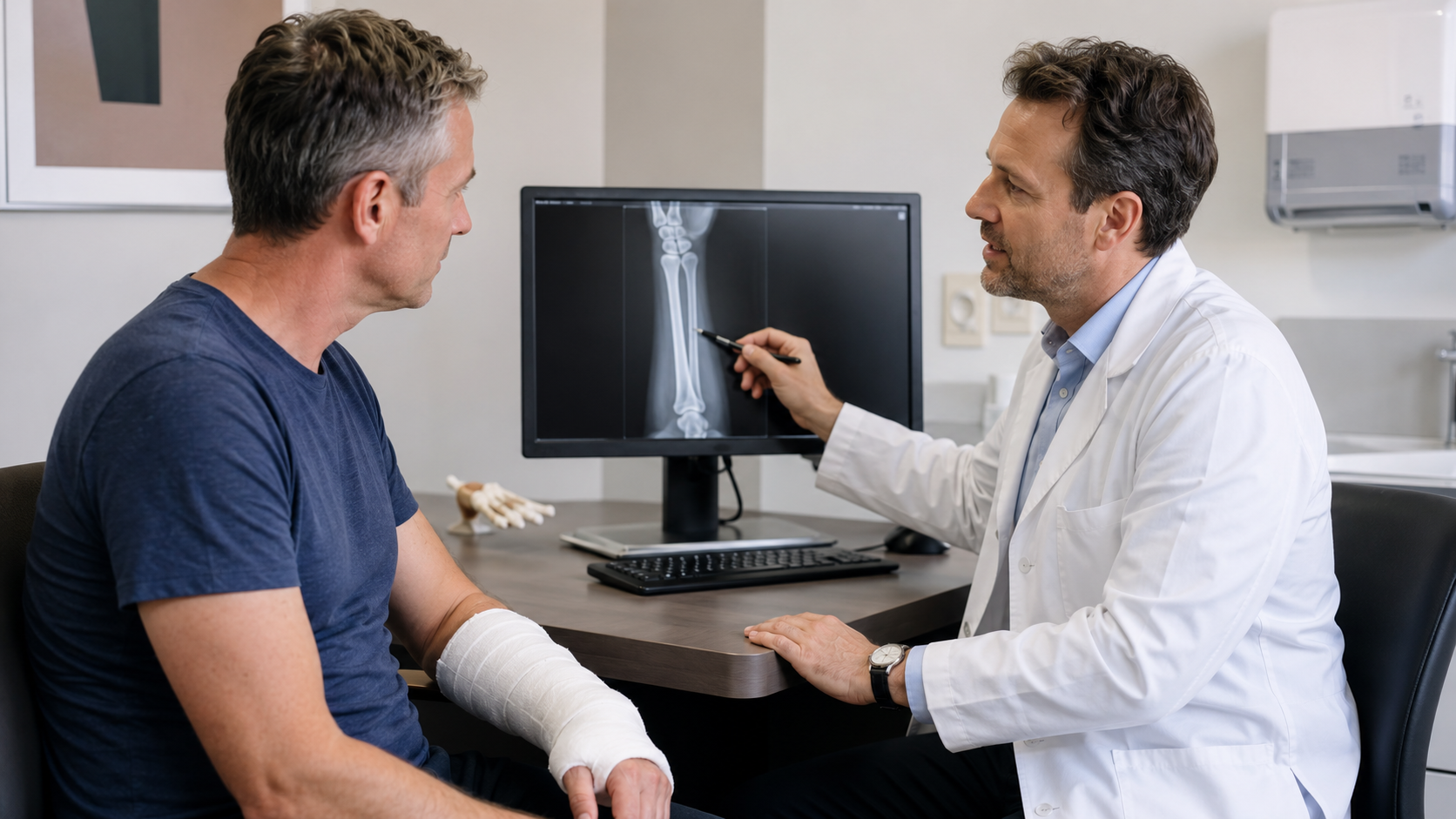
A person with a forearm cast being reviewed by a doctor looking at an X-ray.

Overview

A fracture is simply a break in the continuity of a bone, ranging from a fine crack to a bone broken into several pieces. Unlike many tissues, bone heals by making new bone rather than scar, so a well-managed fracture can end up almost as strong as before.

Healing follows a predictable biological sequence, but it only works well under two conditions: the broken ends must be in reasonable alignment, and they must be held stable enough for new bone to bridge the gap. Much of fracture treatment — whether a cast or an operation — exists to provide exactly those two things. Your general health, nutrition and habits then influence how smoothly the biology proceeds.

Diagram of the four stages of fracture healing: haematoma, soft callus, hard callus and remodelling.

Symptoms & signs

The typical features of a fracture are:

  • Pain, usually immediate and worse with movement or pressure.
  • Swelling and bruising around the area.
  • Deformity — the limb may look bent, shortened or out of shape.
  • Inability to use or bear weight on the injured part.
  • A grinding sensation or sound at the time of injury.
  • Tenderness over a specific point on the bone.

Some fractures — hairline or stress fractures, or fractures in osteoporotic spine — cause more modest pain and can be missed initially, which is why persistent bony pain after an injury or in a high-risk person deserves assessment.

Causes & risk factors

Fractures happen when the force on a bone exceeds its strength:

  • Trauma — falls, road accidents, sports injuries and direct blows are the commonest causes.
  • Fragility fractures — in weakened bone from osteoporosis, even a minor fall or knock can break a bone; these often affect the wrist, hip or spine.
  • Stress fractures — tiny cracks from repetitive overload, common in runners and athletes who increase training too quickly.
  • Pathological fractures — through bone weakened by an underlying condition.

Identifying the cause matters: a fragility fracture, for instance, is a signal to assess and treat the underlying bone weakness so the next one is prevented.

When to see a doctor

Seek prompt medical care for a suspected fracture — significant pain, swelling, deformity, or inability to use or bear weight after an injury. Treat as an emergency and seek immediate care if:

  • The bone is visible through the skin, or there is a wound over a suspected fracture (an open fracture — an emergency because of infection risk).
  • The limb is cold, pale, blue or numb beyond the injury (possible blood-vessel or nerve involvement).
  • There is a suspected fracture of the hip, spine, pelvis or skull, or major trauma.
  • Pain is severe and uncontrolled.

For an older person with sudden severe back pain and no major injury, consider a spinal fragility fracture and seek assessment.

How it's diagnosed

At VinayakM, a suspected fracture is assessed by:

  1. History — how the injury happened (the force involved suggests the likely pattern), and your general health.
  2. Examination — the site, swelling, deformity, skin integrity, and crucially the circulation and nerve function beyond the injury.
  3. X-rays — the main test, usually in two views, to confirm the fracture, its pattern and whether the ends are displaced.
  4. CT scan — for complex fractures, joints, or areas hard to see on X-ray, to plan treatment.
  5. Assessment for fragility — in low-impact fractures, we consider bone-density testing for osteoporosis.

The assessment determines whether the fracture can be treated in a cast or needs surgery, and identifies anything urgent.

Treatment options

The stages of healing (helpful to understand why time and stability matter):

  1. Inflammation — a blood clot (haematoma) forms at the break within days, bringing healing cells.
  2. Soft callus — over the following weeks, soft tissue and cartilage bridge the gap.
  3. Hard callus — this is gradually replaced by new bone, uniting the fracture over weeks to a few months.
  4. Remodelling — over months to years, the bone is reshaped and strengthened along the lines of stress.

Treatment provides alignment and stability so this can happen:

  • Non-surgical — many fractures heal well in a cast, splint or brace, sometimes after the bone is realigned (reduction). Position is monitored with follow-up X-rays.
  • Surgical — displaced, unstable, open, or joint-involving fractures often need surgery to fix the bone with plates, screws, rods or pins, restoring alignment and allowing earlier movement.

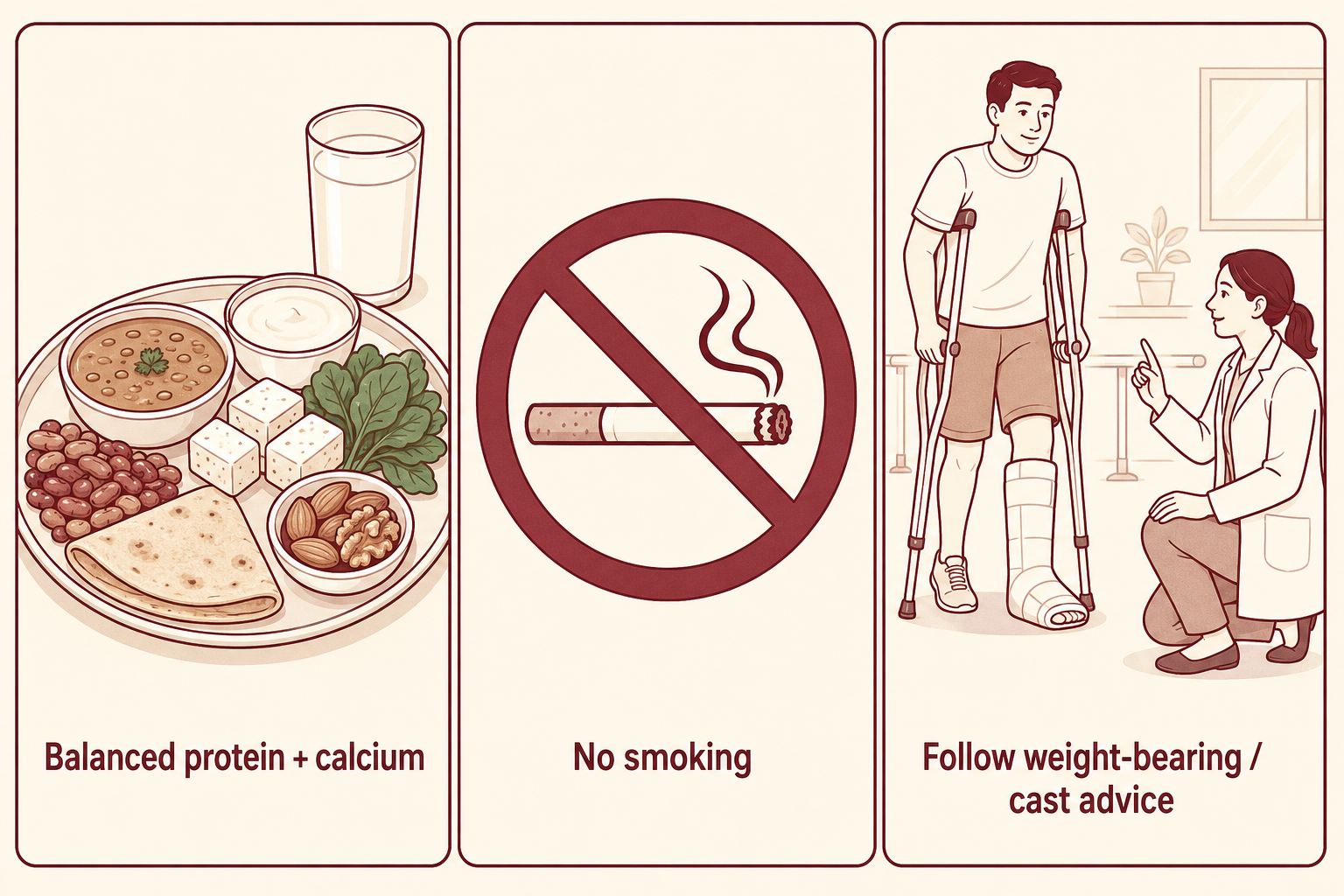
What helps healing: good nutrition (adequate protein, calcium and vitamin D), not smoking (smoking markedly slows bone healing), following weight-bearing and activity instructions, and managing conditions like diabetes.

Rehabilitation — once the bone is stable or united, physiotherapy restores movement, strength and function; stiffness and muscle wasting after immobilisation are common and recoverable.

Typical timelines vary widely — many upper-limb fractures unite in around 6 weeks and lower-limb fractures take longer; children heal faster than adults. Your surgeon will give a timeline for your specific fracture.

How VinayakM helps

At VinayakM in Greater Kailash-1, fractures are managed by Dr Udit Vinayak, whose focus includes trauma as well as sports medicine and joint replacement. That means fracture care is a core skill, not a sideline:

  • Prompt assessment with examination and X-rays (and CT where needed), including checking circulation and nerves.
  • The right treatment — expert casting/splinting where that is best, or surgical fixation for fractures that need it, with a clear explanation of why.
  • Healing support — nutrition advice (with our dietician), vitamin D correction, and stop-smoking guidance, because these genuinely affect healing.
  • Fragility-fracture follow-through — if the break happened from a minor injury, we assess and treat the underlying osteoporosis to prevent the next one.
  • Rehabilitation to restore full movement and strength.

The aim is a united, well-aligned bone and a return to your normal activities.
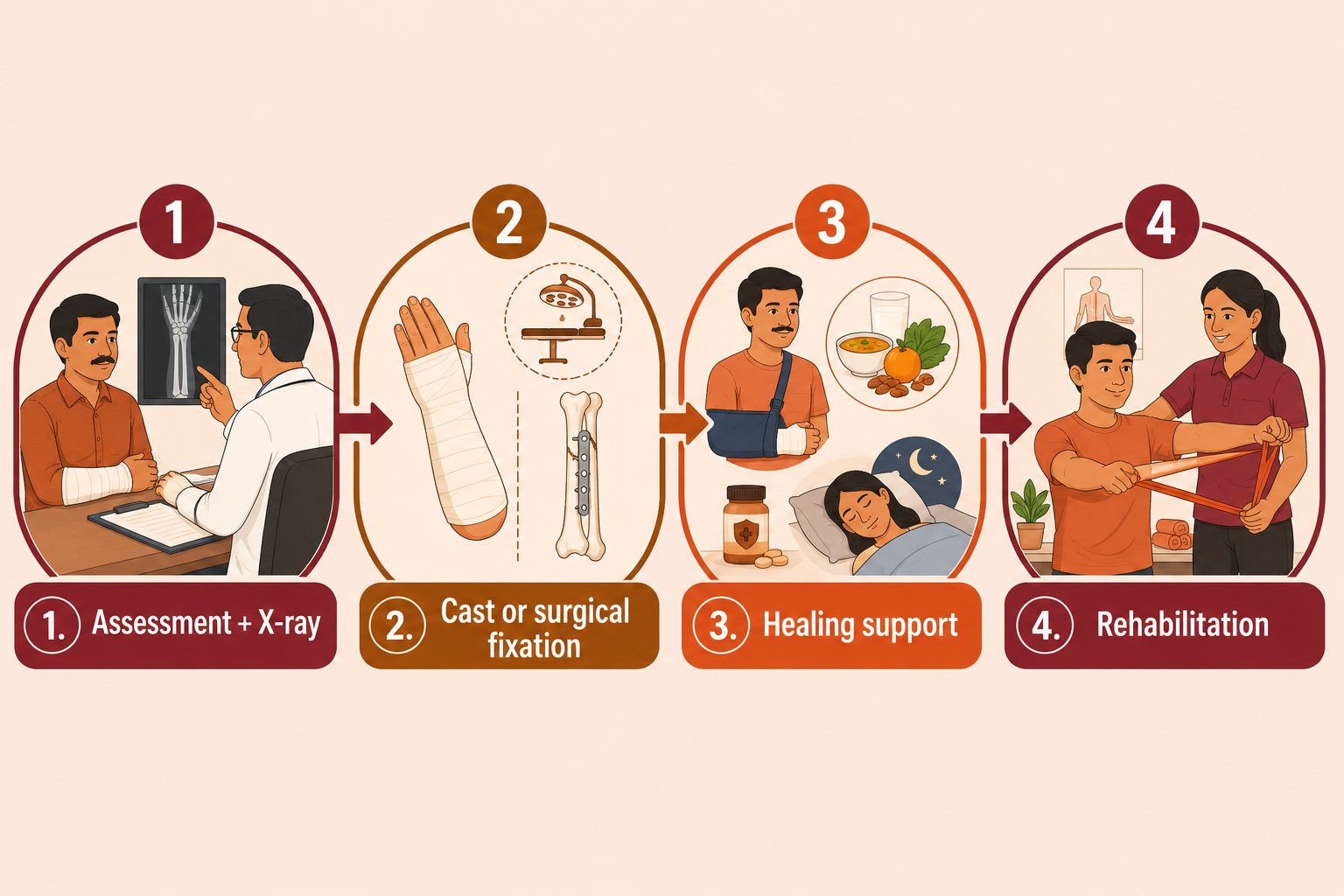
Fracture care pathway: assessment and X-ray, cast or surgical fixation, healing support, and rehabilitation.

Prevention & self-care

Not every fracture is preventable, but risk can be reduced:
  • Strengthen bone — weight-bearing exercise, adequate calcium and protein, and correcting vitamin D deficiency (see bone health).
  • Prevent falls, especially in older adults — balance exercises, safe footwear, home lighting, and reviewing medicines that cause dizziness.
  • Treat osteoporosis if present — bone-protecting treatment substantially lowers fragility-fracture risk (see osteoporosis).
  • Train sensibly — build running and sports load gradually to avoid stress fractures.
  • Use protective equipment and safe practices in sport, on the road and at work.
  • Don't smoke — quite apart from healing, it weakens bone over time.
Illustration of factors that support fracture healing: good nutrition, no smoking and following weight-bearing advice.

Frequently asked questions

How long does a broken bone take to heal?

It varies with the bone, the type of fracture, your age and your health. Many upper-limb fractures unite in around six weeks, while lower-limb and more complex fractures take longer, and children heal faster than adults. Full remodelling and return of strength continue for months afterwards. Your surgeon will give a timeline for your specific fracture.

Does a fracture always need surgery?

No. Many fractures heal well in a cast, splint or brace, sometimes after the bone is realigned. Surgery is needed mainly for fractures that are displaced, unstable, open (bone through skin), or involve a joint surface, where fixing the bone with plates, screws or rods restores alignment and allows safer, earlier movement.

What can I do to help my fracture heal faster?

Follow your surgeon's instructions on immobilisation and weight-bearing, eat well with adequate protein, calcium and vitamin D, and — importantly — do not smoke, as smoking markedly slows bone healing. Managing conditions such as diabetes also helps. There is no supplement or device that reliably speeds normal healing beyond these basics.

Why is an open fracture an emergency?

In an open fracture the broken bone has an associated wound connecting it to the outside, which introduces a serious risk of infection in the bone. It needs urgent hospital care — cleaning, antibiotics and usually surgery — as soon as possible. Any suspected fracture with a wound over it should be treated as an emergency.

I broke a bone from a small fall — should I be worried about my bones?

Possibly. A fracture from a minor fall or low-impact injury can be a 'fragility fracture', a sign that the underlying bone may be weakened by osteoporosis. It is worth being assessed, often with a DEXA bone-density scan, so that any bone weakness can be treated and the risk of a future fracture reduced.


Related reading

References

  1. American Academy of Orthopaedic Surgeons — OrthoInfo. Fractures (broken bones). — https://orthoinfo.aaos.org/en/diseases--conditions/fractures-broken-bones/
  2. National Health Service (NHS). Broken bones and fractures. — https://www.nhs.uk/conditions/broken-bone/
  3. International Osteoporosis Foundation. Fragility fractures. — https://www.osteoporosis.foundation/health-professionals/fragility-fractures
This page is for general information and education only. It is not a substitute for a consultation, diagnosis or treatment from a qualified clinician. If you have any of the red-flag symptoms above, seek medical care promptly.
{"@context":"https://schema.org","@graph":[{"@type":["MedicalClinic","LocalBusiness"],"@id":"https://www.vinayakm.in/#clinic","name":"VinayakM","url":"https://www.vinayakm.in","logo":"https://cdn.prod.website-files.com/6908cd2bb6a88638d8c0e611/6a494a210e7a3f8e0c33192a_vinayakm-name-logo.png","telephone":"+91 92171 75397","email":"info@vinayakm.in","address":{"@type":"PostalAddress","streetAddress":"3rd floor, B-23, Block B, N Block Market","addressLocality":"Greater Kailash-1, New Delhi","addressRegion":"Delhi","postalCode":"110048","addressCountry":"IN"},"geo":{"@type":"GeoCoordinates","latitude":28.556354,"longitude":77.2323718},"openingHours":["Mo-Tu 09:00-20:00","Th-Su 09:00-20:00"],"founder":{"@type":"Person","name":"Mani Sharma"},"sameAs":["https://maps.app.goo.gl/jPVPXKfH8qAUUDeo8"]},{"@type":"MedicalWebPage","@id":"https://www.vinayakm.in/orthopaedics/fracture-healing#webpage","url":"https://www.vinayakm.in/orthopaedics/fracture-healing","name":"Fractures & How Bones Heal | VinayakM","description":"How broken bones heal, the stages of fracture repair, typical healing times, what helps and what slows it, and when a fracture needs surgery. Guidance from a GK-1 surgeon.","inLanguage":"en-IN","about":{"@type":"MedicalCondition","name":"Bone fracture","alternateName":["Broken bone","Fracture healing","Bone healing"]},"author":{"@type":"Physician","name":"Dr Udit Vinayak","jobTitle":"Trauma, Sports Medicine & Joint Replacement Surgeon","url":"https://www.vinayakm.in/team/dr-udit-vinayak","medicalSpecialty":"Orthopedic"},"reviewedBy":{"@type":"Physician","name":"Dr Udit Vinayak","jobTitle":"Trauma, Sports Medicine & Joint Replacement Surgeon","url":"https://www.vinayakm.in/team/dr-udit-vinayak","medicalSpecialty":"Orthopedic"},"lastReviewed":"2026-07-05","dateModified":"2026-07-05","publisher":{"@id":"https://www.vinayakm.in/#clinic"},"medicalAudience":{"@type":"MedicalAudience","audienceType":"Patient"}},{"@type":"FAQPage","@id":"https://www.vinayakm.in/orthopaedics/fracture-healing#faq","mainEntity":[{"@type":"Question","name":"How long does a broken bone take to heal?","acceptedAnswer":{"@type":"Answer","text":"It varies with the bone, the type of fracture, your age and your health. Many upper-limb fractures unite in around six weeks, while lower-limb and more complex fractures take longer, and children heal faster than adults. Full remodelling and return of strength continue for months afterwards. Your surgeon will give a timeline for your specific fracture."}},{"@type":"Question","name":"Does a fracture always need surgery?","acceptedAnswer":{"@type":"Answer","text":"No. Many fractures heal well in a cast, splint or brace, sometimes after the bone is realigned. Surgery is needed mainly for fractures that are displaced, unstable, open (bone through skin), or involve a joint surface, where fixing the bone with plates, screws or rods restores alignment and allows safer, earlier movement."}},{"@type":"Question","name":"What can I do to help my fracture heal faster?","acceptedAnswer":{"@type":"Answer","text":"Follow your surgeon's instructions on immobilisation and weight-bearing, eat well with adequate protein, calcium and vitamin D, and — importantly — do not smoke, as smoking markedly slows bone healing. Managing conditions such as diabetes also helps. There is no supplement or device that reliably speeds normal healing beyond these basics."}},{"@type":"Question","name":"Why is an open fracture an emergency?","acceptedAnswer":{"@type":"Answer","text":"In an open fracture the broken bone has an associated wound connecting it to the outside, which introduces a serious risk of infection in the bone. It needs urgent hospital care — cleaning, antibiotics and usually surgery — as soon as possible. Any suspected fracture with a wound over it should be treated as an emergency."}},{"@type":"Question","name":"I broke a bone from a small fall — should I be worried about my bones?","acceptedAnswer":{"@type":"Answer","text":"Possibly. A fracture from a minor fall or low-impact injury can be a 'fragility fracture', a sign that the underlying bone may be weakened by osteoporosis. It is worth being assessed, often with a DEXA bone-density scan, so that any bone weakness can be treated and the risk of a future fracture reduced."}}]},{"@type":"BreadcrumbList","@id":"https://www.vinayakm.in/orthopaedics/fracture-healing#breadcrumbs","itemListElement":[{"@type":"ListItem","position":1,"name":"Home","item":"https://www.vinayakm.in"},{"@type":"ListItem","position":2,"name":"Orthopaedics","item":"https://www.vinayakm.in/orthopaedics"},{"@type":"ListItem","position":3,"name":"Fractures & How Bones Heal: What to Expect","item":"https://www.vinayakm.in/orthopaedics/fracture-healing"}]}]}
WhatsApp