Knees are built to last a lifetime, but they respond to how they are used. The good news is that the factors most strongly linked to long-term knee problems — weak muscles, excess weight, sudden overload and poorly rehabilitated injuries — are largely within your control. Looking after your knees is less about avoiding activity and more about loading them well: enough to keep the joint and its cartilage nourished and the muscles strong, without sudden spikes the joint is not prepared for.
This guide is for people who want to protect healthy knees, and for those with early niggles who want to keep them from progressing. If you already have significant knee pain, see our knee pain and knee osteoarthritis pages for condition-specific advice.

This is a preventive guide rather than a condition, but a few early warning signs are worth acting on before they become established problems:
None of these is an emergency, but each is a cue to strengthen the knee, review your activity and, if it persists beyond a few weeks, get it assessed.
Understanding what puts knees at risk explains why the advice below works. The main modifiable risk factors are:
Age, sex and genetics also play a part and cannot be changed — which is exactly why the modifiable factors deserve attention.
As a general guide, have a knee assessed rather than simply pushing on if:
And seek prompt care for any red flags — a hot, red, swollen knee with fever, inability to bear weight, or a deformed joint after injury.
You do not need a diagnosis to protect healthy knees. But if you are starting exercise with existing niggles, a quick assessment can make it safer and more effective. At VinayakM this means a brief history (past injuries, current activity, what aggravates the knee), a examination of muscle strength, alignment and stability, and — only if something specific is suspected — imaging. Most people leave with a tailored strengthening plan rather than a scan.
The 'treatment' for knee-health maintenance is a set of habits, each backed by evidence:
1. Strengthen the muscles around the knee.
2. Keep a healthy body weight.
3. Stay active with a mix of activities.
4. Increase new activity gradually.
5. Look after injuries properly.
6. Sensible footwear and surfaces.
These cost nothing and outperform any supplement.
At VinayakM in Greater Kailash-1, Dr Udit Vinayak (trauma, sports medicine and joint replacement surgeon) sees the full arc of knee problems — which makes prevention advice concrete rather than generic. We offer:
The aim is simple: keep your own knees serving you well for as long as possible.
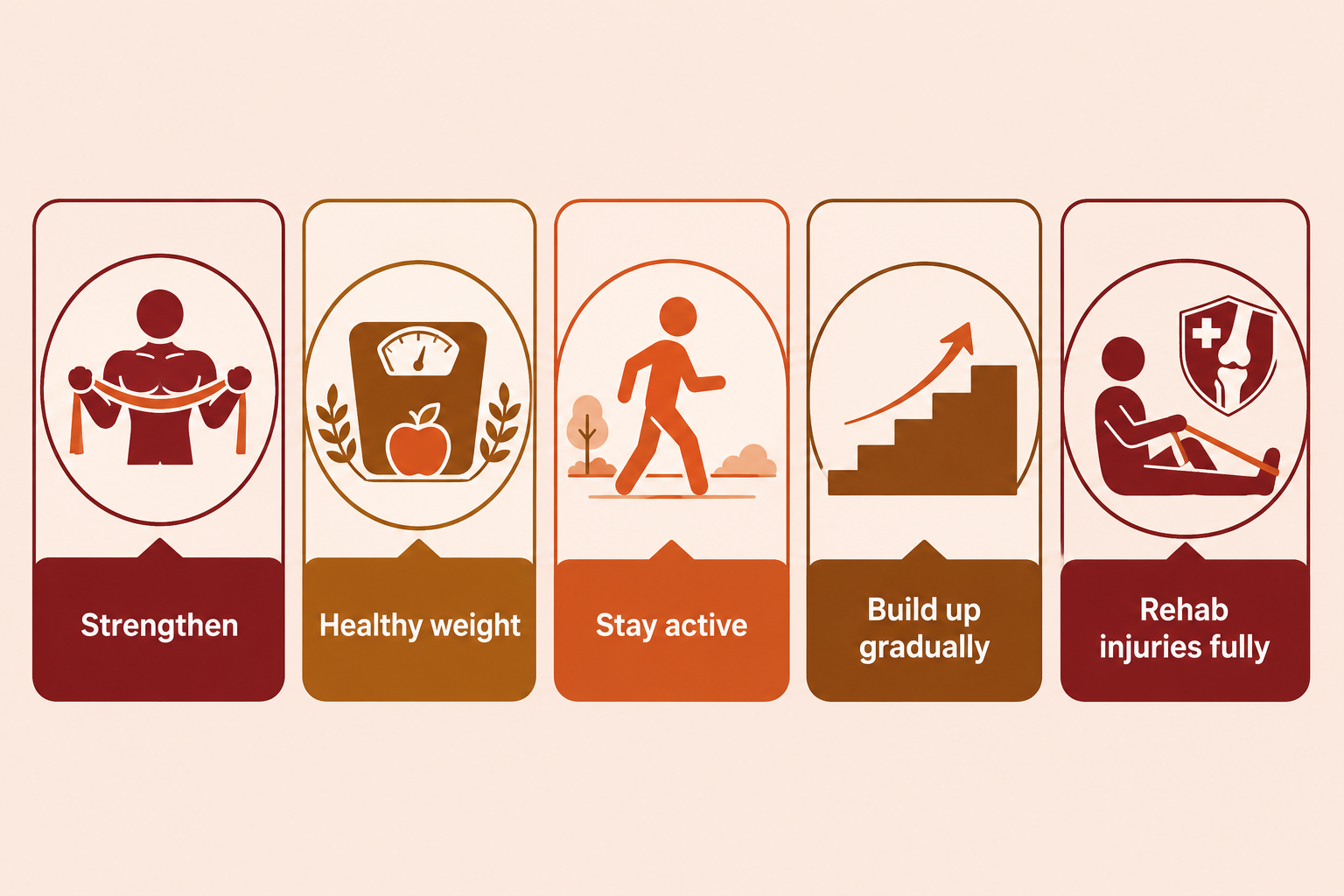
If you remember only a handful of things, make them these:
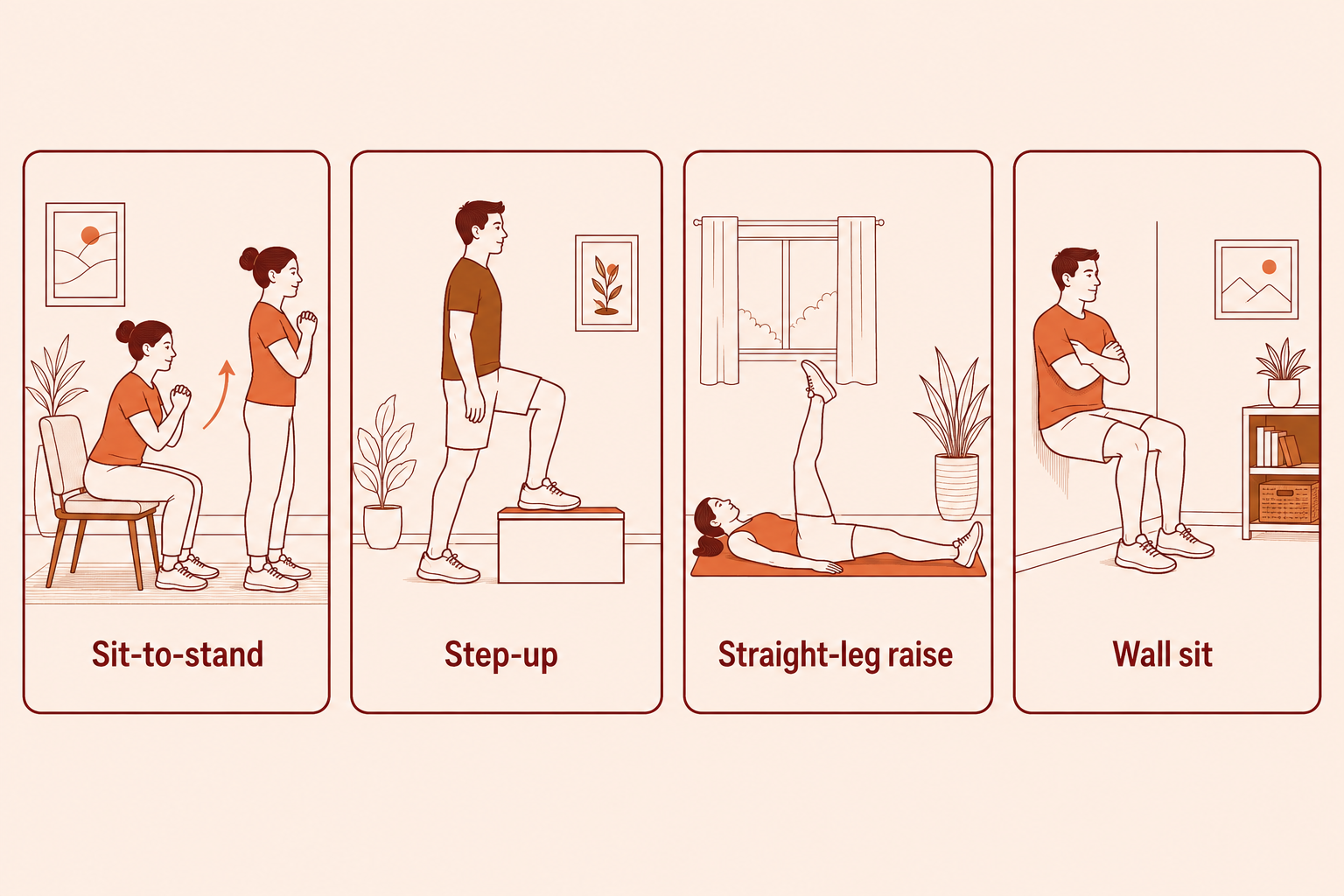
If you had to pick one, the sit-to-stand (standing up from a chair and sitting back down under control) is hard to beat — it strengthens the quadriceps and hips together in a movement you use all day. Build up repetitions gradually, and progress to step-ups and other strength work for the best protection.
For healthy knees, using stairs is good exercise and helps keep the leg muscles strong. Stairs do load the kneecap heavily, so if you have front-of-knee pain, build up gradually and strengthen the thigh and hip muscles. Avoiding stairs entirely tends to weaken the very muscles that protect the knee.
For everyday healthy knees, a support is not needed and can encourage reliance rather than strength. Braces have specific roles — after certain injuries or for particular instabilities — best advised by a clinician. For general knee health, strengthening the muscles is far more valuable than a sleeve.
The evidence that glucosamine, chondroitin or collagen protect or rebuild knees is weak, and major guidelines do not recommend them. The money and effort are better spent on strengthening, staying active and maintaining a healthy weight, which have strong evidence behind them.
Controlled squatting within a comfortable range is a useful strengthening exercise for most people. Problems come from very deep, heavy or repetitive loaded squatting, or squatting through pain. If deep squatting flares your knee, reduce the depth and load rather than avoiding the movement altogether.


.svg)
.svg)