
The ankle is a hard-working hinge joint that carries your body weight and adapts to uneven ground with every step. Pain there is common and usually follows an injury, most often a sprain. But the ankle region includes several structures — the joint surfaces, the ligaments on each side, the tendons that pass around it (including the Achilles behind and the peroneal tendons outside), and nearby bones — so pain can come from any of them.
Most ankle pain is short-lived and settles with sensible self-care. The important tasks are to recognise the injuries that need assessment (to rule out fractures and significant tears), and to rehabilitate properly, because poorly recovered ankle sprains are the main reason ankles go on to feel weak and sprain repeatedly.
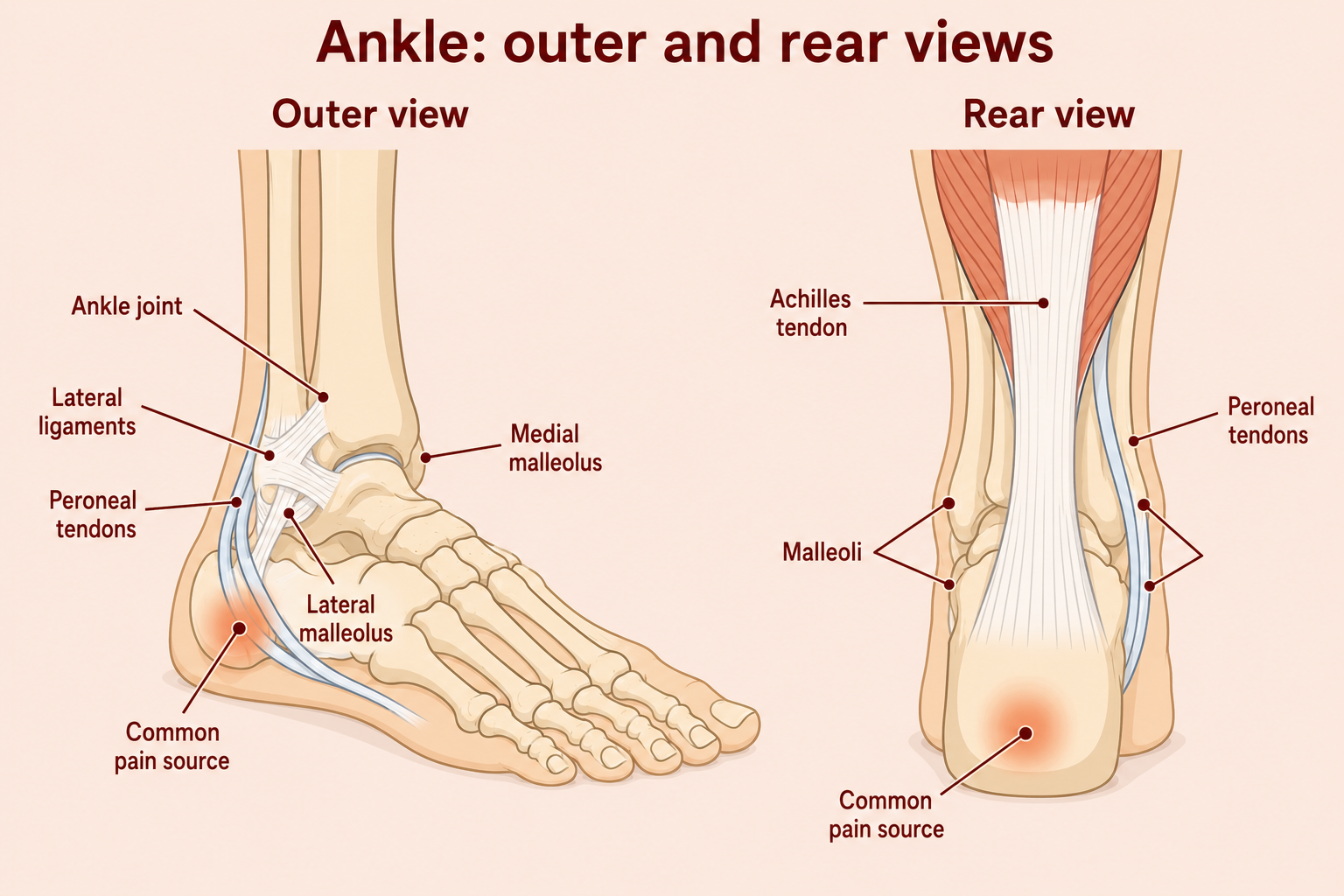
Depending on the cause, ankle pain may come with:
The pattern — sudden after a twist, versus gradual, versus hot and inflamed — points to the likely cause.
Common causes of ankle pain include:
The cause guides the treatment, which is why assessment matters when pain is significant or persistent.
Seek prompt care if, after an injury, you:
Seek urgent care regardless of injury for:
And see a doctor routinely if ankle pain is not improving after a couple of weeks, or if the ankle keeps giving way or spraining.
At VinayakM, ankle pain is assessed by:
The assessment separates simple sprains (most cases) from fractures, significant tears and inflammatory causes.
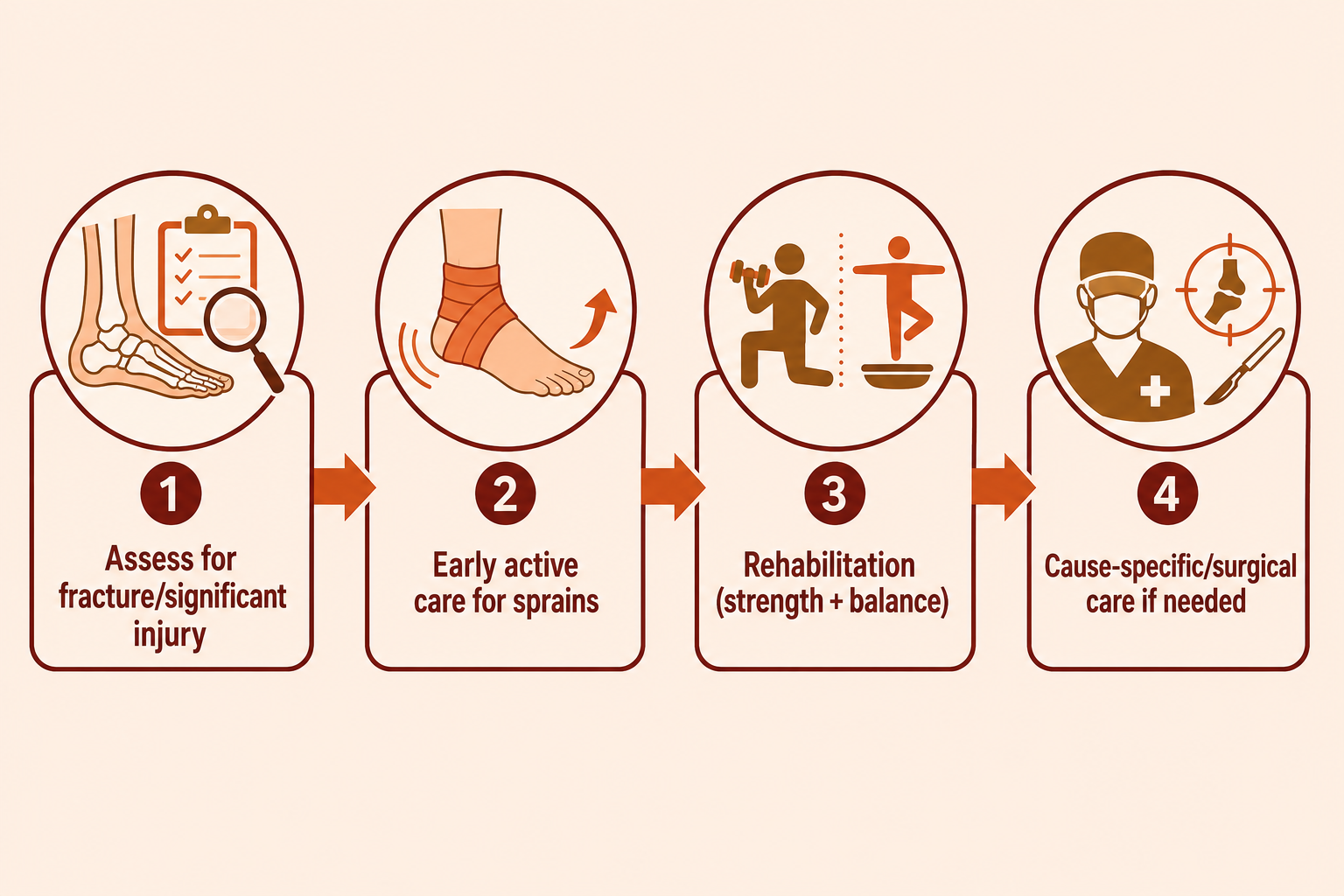
For most sprains and mild ankle pain, treatment is straightforward and non-surgical:
1. Early care after a sprain or minor injury:
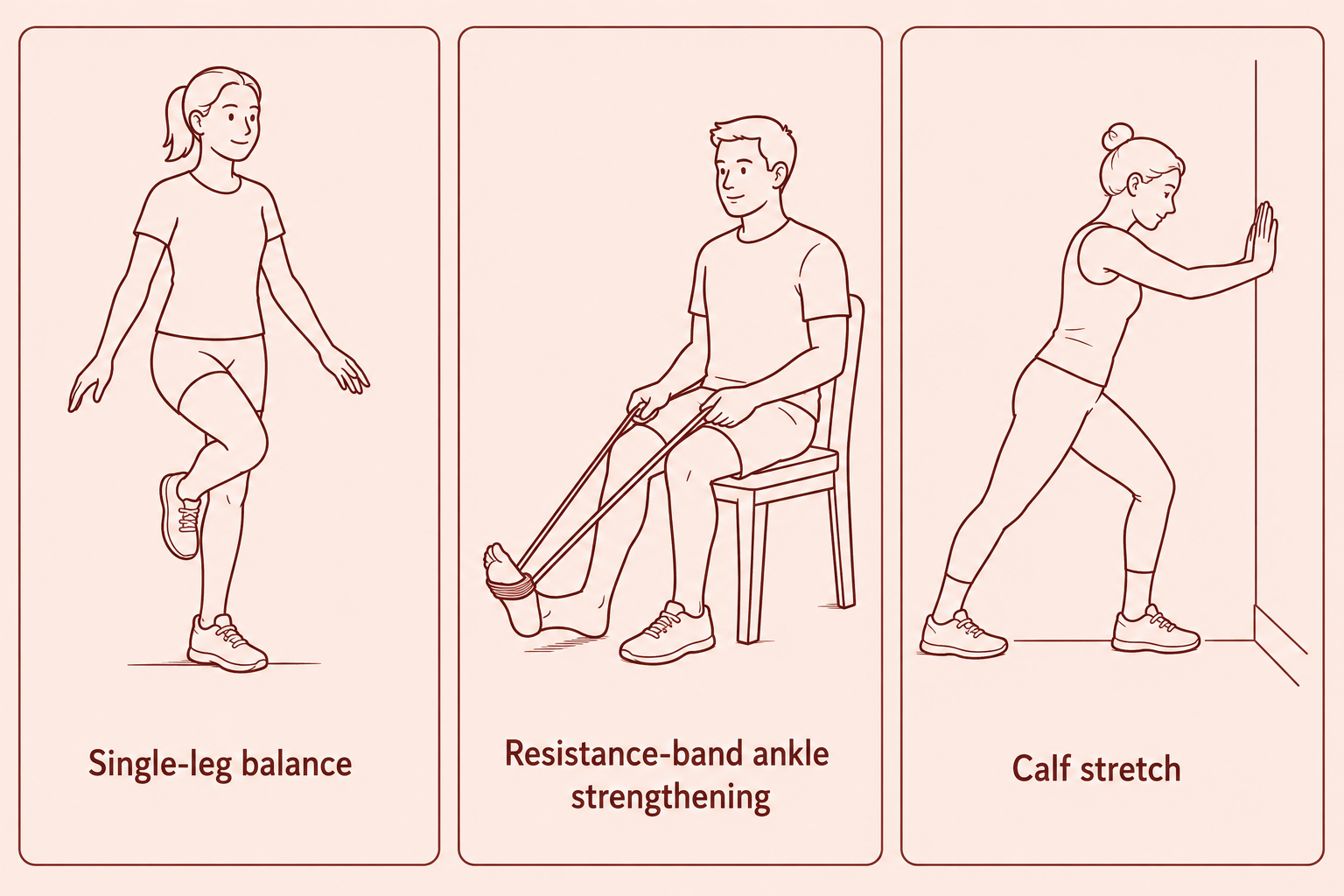
2. Rehabilitation (the key to a lasting recovery):
3. Cause-specific treatment:
4. Surgery — for a minority: certain fractures, some persistent significant ligament instability not helped by rehabilitation, or specific tendon or arthritis problems.
Most people recover fully with early sensible care and good rehabilitation.
At VinayakM in Greater Kailash-1, ankle pain is assessed by Dr Udit Vinayak (trauma, sports medicine and joint replacement surgeon) — with trauma and sports medicine both directly relevant to ankles:
The emphasis is on a full recovery and a stable ankle, not just settling the immediate pain.
Especially if you have sprained an ankle before, you can reduce the risk of future pain:
You often cannot tell for certain without assessment. Warning signs that suggest a possible fracture rather than a simple sprain include being unable to bear weight, a deformed-looking ankle, and tenderness directly over the ankle bones rather than the soft tissue. If any of these are present, or pain and swelling are severe, get an X-ray to check.
Mild sprains often improve within one to three weeks, while more significant ligament injuries take longer. Early gentle movement and, importantly, a rehabilitation programme of strengthening and balance work speed recovery and, crucially, reduce the chance of the ankle spraining again. Pain not improving after a couple of weeks is worth reviewing.
Recurrent giving-way, called chronic ankle instability, usually follows earlier sprains that were not fully rehabilitated, leaving the ankle weak and its balance-sensing impaired. A targeted programme of strengthening and balance training resolves this for most people; a minority with persistent instability may need further assessment or, occasionally, surgery.
Brief protection and rest in the first days help control pain and swelling, but prolonged complete rest slows recovery. Current advice favours starting gentle movement early and progressing to a graded strengthening and balance programme, which restores function faster and helps prevent future sprains. A physiotherapist can guide the pace.
Yes. If ankle pain came on without injury — especially if the joint is hot, red and very swollen, or if you have recurring episodes — gout or inflammatory arthritis is possible, and a hot swollen joint with fever needs urgent assessment to exclude infection. Gradual stiffness and aching, particularly after old injuries, may indicate osteoarthritis. These are diagnosed and treated differently from sprains.


.svg)
.svg)